

Welcome to today’s Battle Royale featuring two roofing heavyweights: “Dwarf Trees” in the east corner versus “Standard Trees” in the west!
Tonight’s showdown pits these contenders against each other across six punishing rounds designed to test every aspect of their performance for Recommended Height for Trees Near Commercial Roofs.
At stake? Millions in potential costs, decades of building protection, and the critical performance demands of modern commercial and industrial facilities.
Our professional judging panel will evaluate each round on technical merit, real-world performance, and value delivery. After all six rounds, we’ll declare our ultimate champion.
Ladies and gentlemen, facility managers and building owners… it’s time to rumble!
ROUND 1: INITIAL COSTS & INSTALLATION
Here’s a reality check for property managers: Every time a standard tree grows another foot taller near your commercial roof, your wallet gets a little lighter. While marketing brochures love showing majestic oaks towering over office buildings, they conveniently forget to mention the maintenance headaches and potential structural nightmares lurking beneath those picturesque branches.
Material Expenses
Let’s cut through the landscaping hype and talk real numbers. Dwarf trees typically run $50-150 per specimen, while their taller cousins can easily command $200-500+ each, before you even think about specialized planting materials.
Standard trees require industrial-grade root barriers, enhanced drainage systems, and specialized soil amendments – fancy words for “more money out of your pocket.” Meanwhile, dwarf varieties thrive with basic planting supplies and standard soil preparation.
The real kicker? Those bargain-priced standard trees often need premium-grade support systems and root containment solutions that can triple your initial material costs. For pure economics, dwarf trees claim a clear ADVANTAGE.
Installation Complexity
Installing dwarf trees near commercial roofs is about as complicated as setting up your office coffee maker. Their compact root balls require minimal excavation, and standard landscaping crews can handle the job without calling in specialists.
Standard trees? That’s like trying to parallel park a semi truck in downtown traffic. Their massive root systems demand extensive ground preparation, often requiring heavy equipment that can damage existing landscaping and utilities.
The complexity gap widens when you factor in roof protection measures. While dwarf trees need basic precautions, standard trees require elaborate root barriers and sophisticated drainage systems that would make an engineer’s head spin. ADVANTAGE: Dwarf Trees.
Project Timeline
Time is money, and dwarf tree installation keeps the meter running on low. Most projects wrap up in a single day, minimizing disruption to your business operations and keeping labor costs in check.
Standard tree installations love to drag on like a Monday morning meeting. Between site preparation, specialized equipment coordination, and multiple crew visits, you’re looking at several days minimum – assuming perfect weather and no surprises lurking underground.
When you factor in the extended planning phase and potential permit delays for larger trees, dwarf varieties sprint ahead with another clear ADVANTAGE.
ROUND 1 WINNER: Dwarf Trees
ROUND 2: DURABILITY & LIFESPAN
Let’s talk about the elephant on your roof – those towering trees that marketing brochures love but facility managers dread. While standard trees might look impressive in architectural renderings, their real-world impact on commercial roofs can turn your maintenance budget into confetti. Tree branches should maintain a minimum 6-10 foot clearance from your roof, a critical factor that many property owners overlook until it’s too late. (source: Rogue Tree Solutions)
Durability Against Environmental Stressors
When Mother Nature throws a tantrum, dwarf trees bend while standard trees break – and guess where those broken branches land? Right on your expensive commercial roof.
Dwarf trees naturally maintain a safe distance from your roofline, their compact canopies acting like built-in insurance against wind damage. Their smaller size means less debris accumulation and reduced risk of punctures or tears in roofing materials.
Standard trees, meanwhile, turn into nature’s wrecking balls during storms. Their massive branches become projectiles, and their excessive height makes them lightning rods for trouble – literally.
For sheer survival odds in urban warfare against weather, dwarf trees claim the ADVANTAGE.
Lifespan Considerations
Here’s an inconvenient truth: standard trees near commercial buildings often face premature removal. Not because they’re unhealthy, but because they’ve become liability time bombs ticking above your tenants’ heads.
Dwarf trees, designed for compact spaces, typically outlive their standard cousins in commercial settings. Their manageable size means they rarely outgrow their welcome or threaten structural integrity.
The math is simple – when standard trees need removal due to size concerns, you’re not just losing a tree. You’re losing thousands in removal costs and potentially facing roof repairs that could have been avoided.
For long-term stability and reduced replacement needs, dwarf trees secure another clear ADVANTAGE.
Impact on Roof and Structural Integrity
Your commercial roof isn’t just fighting gravity – it’s battling an aerial assault from standard trees that shower it with leaves, twigs, and enough organic matter to start a composting business.
Dwarf trees keep their impact minimal, with manageable root systems that respect boundaries and canopies that don’t turn your drainage system into a seasonal salad bar.
Standard trees, however, wage a constant war of attrition against your roofing membrane. Their aggressive roots can breach barriers, while their massive canopies create moisture traps that accelerate roof deterioration.
When it comes to preserving roof integrity, dwarf trees lock down another decisive ADVANTAGE.
ROUND 2 WINNER: Dwarf Trees

ROUND 3: PERFORMANCE FACTORS
Every property manager’s nightmare starts with that dreaded phone call: “There’s water dripping from the ceiling.” While you’re busy pointing fingers at the roof membrane, the real culprit might be looming right outside your window. When it comes to commercial roofs, tree height isn’t just an aesthetic concern – it’s a make-or-break factor that can determine whether your roof lasts 20 years or becomes a costly cautionary tale.
Impact on Drainage Systems
Let’s talk about nature’s plumbing problems. Mature standard trees should be placed 20-30 feet away from buildings – and sometimes even up to 50 feet – to prevent their massive root systems from turning your drainage network into their personal spa. (source: A. Fricker Roofing and Waterproofing)
Dwarf trees play nice with your drainage setup, their compact root systems staying where they belong instead of staging an underground invasion. Their manageable canopy spread means less leaf litter clogging your drains and fewer maintenance headaches.
Standard trees, however, treat your drainage system like their personal obstacle course. Their aggressive roots can crush pipes, while their massive canopies dump enough organic matter to start a composting business in your gutters.
ADVANTAGE: Dwarf Trees
Maintenance Requirements
Here’s a truth bomb: maintaining standard trees near commercial roofs is like trying to give a giraffe a haircut – expensive, complicated, and potentially dangerous. Every branch needs monitoring, every growth spurt demands attention, and every storm brings the potential for disaster.
Dwarf trees keep things simple with predictable growth patterns and manageable maintenance schedules. Their compact size means basic pruning tools and standard maintenance crews can handle routine care without specialized equipment or expertise.
Standard trees demand constant vigilance, specialized equipment, and crews with nerves of steel. The taller they grow, the more complex and costly their care becomes, turning routine maintenance into a high-stakes aerial operation.
ADVANTAGE: Dwarf Trees
Long-Term Roofing Impact
Your commercial roof faces enough challenges without adding tree-related drama to the mix. Every inch a standard tree grows above your roofline multiplies the potential for problems, from wind-whipped branches to root-induced structural stress.
Dwarf trees remain the considerate neighbors of the plant world, maintaining a respectful distance that protects your roofing investment. Their modest height and controlled growth pattern minimize impact on roofing materials and structural integrity.
Standard trees, meanwhile, wage a constant campaign of aerial assault on your roof. Between falling branches, invasive roots, and moisture retention issues, they’re basically running a demolition derby above your head.
ADVANTAGE: Dwarf Trees
ROUND 3 WINNER: Dwarf Trees
ROUND 4: MAINTENANCE REQUIREMENTS
Every facilities manager knows the harsh truth: trees near commercial roofs aren’t just landscaping features – they’re ticking maintenance time bombs. While marketing materials showcase pristine rooftops surrounded by lush foliage, the reality involves endless battles against debris, structural threats, and maintenance crews who increasingly resemble urban mountaineers.
Routine Maintenance Burden
Tree branches should maintain at least 6-10 feet of clearance from your roof to prevent immediate damage, while larger trees need 20-30 feet of spacing to avoid long-term structural issues. (source: Rogue Tree Solutions)
Dwarf trees keep maintenance simple and predictable. Their compact size means basic pruning tools and ground-level access are usually sufficient, while their limited canopy produces manageable amounts of debris that won’t overwhelm your drainage systems.
Standard trees transform routine maintenance into an expensive aerial circus act. Each trimming session requires specialized equipment, certified climbers, and enough cleanup crews to handle mountains of debris – turning simple maintenance into a full-scale production.
For keeping maintenance headaches to a minimum, dwarf trees claim a clear ADVANTAGE.
Emergency Response Requirements
When storms hit, the real difference between dwarf and standard trees becomes brutally clear. Emergency crews dealing with dwarf trees face manageable challenges that rarely require specialized equipment or after-hours response.
Standard trees turn every major weather event into a potential crisis. Their massive branches become projectiles, their extensive root systems threaten underground utilities, and their height means emergency repairs often require crane rentals and road closures.
The math is simple: fewer emergencies mean lower costs and less disruption to your operations. ADVANTAGE: Dwarf Trees.
Seasonal Inspection Complexity
Dwarf trees allow for thorough inspections from ground level, making it easy to spot potential issues before they become problems. Their predictable growth patterns mean fewer surprises during routine assessments.
Standard trees force inspection teams to play hide-and-seek with potential problems. Their height and spread make thorough examinations challenging, often requiring expensive lift equipment and extended inspection times.
When every minute of inspection time adds to your maintenance budget, the accessibility of dwarf trees delivers another clear ADVANTAGE.
ROUND 4 WINNER: Dwarf Trees
ROUND 5: SUSTAINABILITY CREDENTIALS
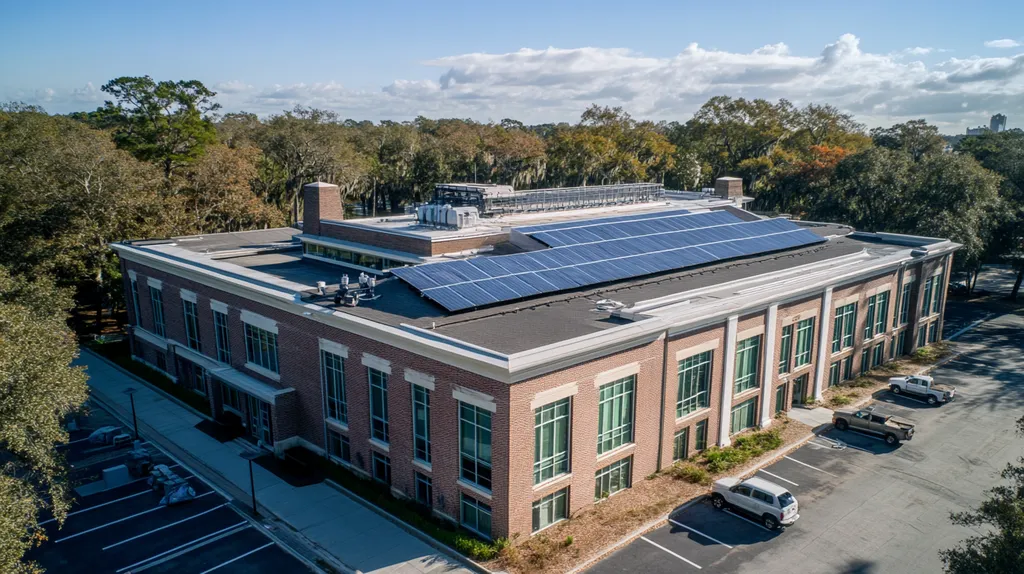
The green revolution has finally hit commercial roofing, and facility managers are discovering that sustainability isn’t just about solar panels and recycled materials. While marketing teams love to tout their LEED points, the real environmental impact often comes down to a simple question: how tall should those trees next to your building actually be?
Carbon Footprint & Resource Consumption
Dwarf trees are the Toyota Prius of the landscaping world – efficient, practical, and surprisingly powerful when it comes to environmental benefits. Their compact size means less water consumption, reduced pruning waste, and minimal equipment needs for maintenance.
Their root systems work in harmony with existing infrastructure, requiring fewer chemical barriers and less frequent intervention. The reduced maintenance schedule means fewer truck rolls, less fuel consumption, and lower carbon emissions from service vehicles.
Standard trees, meanwhile, are gas-guzzling SUVs that demand constant attention. Their massive size requires heavy equipment for maintenance, creating a significant carbon footprint from regular trimming operations and debris removal.
For environmental efficiency and resource management, dwarf trees secure a clear ADVANTAGE.
Ecosystem Impact
Dwarf trees create sustainable microhabitats that support local wildlife without overwhelming building systems. Their manageable size allows for strategic placement that maximizes benefits like shade and wind protection while minimizing structural risks.
Their controlled growth patterns mean less chemical intervention for pest control and disease management. The balanced canopy density provides adequate wildlife shelter without creating moisture traps against your roof.
Standard trees often disrupt local ecosystems by dominating the landscape and creating imbalanced environments. Their aggressive growth can overwhelm native species, while their massive canopies can create problematic wildlife highways directly to your roof.
For sustainable ecosystem management, dwarf trees claim another ADVANTAGE.
Energy Efficiency Impact
The myth that bigger trees mean better energy savings needs to die. Dwarf trees, when properly placed, provide targeted shade where needed without creating problematic overflow onto roofing systems that can trap moisture and accelerate deterioration.
Their strategic positioning allows for optimal solar panel placement and natural ventilation patterns. The controlled height means shade patterns remain consistent and manageable throughout the seasons.
Standard trees often create excessive shade that reduces solar panel efficiency and prevents natural roof drying. Their shifting canopies can create unpredictable energy impacts that complicate HVAC system operation and performance.
For balanced energy management, dwarf trees secure the final ADVANTAGE.
ROUND 5 WINNER: Dwarf Trees
ROUND 6: SPECIALIZED APPLICATIONS
Let’s talk about the elephant in the courtyard – those towering trees that architects love sketching but maintenance crews dread managing. While your marketing brochures showcase peaceful scenes of nature embracing architecture, the reality often involves emergency crews, structural engineers, and maintenance budgets that hemorrhage money faster than a broken sprinkler system.
Rooftop Gardens and Green Spaces
Arborists recommend placing mature trees 20 to 30 feet away from buildings – and sometimes even up to 50 feet, depending on their type. This crucial spacing requirement often makes standard trees completely incompatible with rooftop garden designs. (source: A. Fricker Roofing and Waterproofing)
Dwarf trees thrive in contained rooftop environments, their compact root systems playing nicely with weight restrictions and structural load limits. Their predictable growth patterns make them ideal candidates for green roof initiatives where space and weight are premium considerations.
Standard trees, meanwhile, transform rooftop gardens into structural nightmares. Their aggressive root systems breach waterproofing membranes, while their excessive weight can compromise building integrity.
For rooftop applications, dwarf trees claim a decisive ADVANTAGE.
Urban Heat Island Mitigation
Commercial properties in dense urban environments face unique challenges when it comes to temperature management. Dwarf trees provide targeted shade coverage without creating problematic overflow zones that trap moisture against roofing materials.
Their strategic placement allows for optimal solar reflection while maintaining crucial airflow patterns around roofing systems. The controlled canopy spread means better management of heat distribution and reduced AC load.
Standard trees often create excessive shade zones that prevent proper roof ventilation and natural drying cycles. Their massive canopies can actually worsen urban heat island effects by trapping hot air pockets against building surfaces.
For urban temperature management, dwarf trees secure another clear ADVANTAGE.
Solar Panel Integration
The renewable energy revolution demands smarter landscaping choices. Dwarf trees allow for strategic placement that complements solar panel installations rather than competing with them.
Their predictable height and spread make it easier to calculate shadow patterns and optimize panel placement. The reduced maintenance needs mean fewer disruptions to solar energy production during pruning or cleanup operations.
Standard trees wage a constant war against solar efficiency, their shifting shadows creating unpredictable energy generation patterns. Their excessive height often forces compromise between green energy goals and landscaping aesthetics.
For solar compatibility, dwarf trees lock down the final ADVANTAGE.
ROUND 6 WINNER: DWARF TREES
AND THE WINNER IS…
Ladies and gentlemen, after six punishing rounds of technical analysis, we have a UNANIMOUS DECISION! With a clean sweep across all categories, DWARF TREES emerge as our undisputed champion in the battle for commercial roofing compatibility!
The champion dominated with a masterful display of cost efficiency, structural compatibility, and maintenance manageability. From initial installation costs to long-term sustainability credentials, dwarf trees delivered knockout performances in every round.
But don’t count standard trees out completely, folks! In locations with extensive buffer zones or where massive shade coverage is required for large parking areas, these titans of the arboreal world still have their place in the commercial landscape.
*Important Referee’s Note:* Every facility faces unique challenges based on local climate, building design, and specific operational requirements. This analysis provides general guidance but cannot account for all variables. Property owners should always consult qualified arborists and roofing professionals who can evaluate their specific situation before making final selections.
Remember, champions: In the high-stakes arena of commercial roofing, victory doesn’t just come from picking the strongest contender – it comes from choosing the right fighter for YOUR specific battle. Now get out there and make your property a winner!
FREQUENTLY ASKED QUESTIONS
Q. What costs should I expect for trees near my commercial roof?
A. Expect a price range of $50-150 for dwarf trees. Standard trees? You’re looking at $200-500 each, plus hidden costs for maintenance and heavy installation. Dwarf trees not only spare your budget but also keep unexpected expenses at bay.
Q. How do trees impact my commercial roof’s durability?
A. Dwarf trees maintain a safer distance and provide natural wind resistance, reducing roof damage. In contrast, standard trees are prone to branch breakage and root threats, causing significant roof repair needs. Choose wisely to keep your roof intact.
Q. What is the drainage impact of trees near my commercial roof?
A. Dwarf trees have less invasive roots that minimize interference with drainage systems. Standard trees can quickly become drainage disasters, as their roots disrupt pipes and party in your gutters. Keep your drains clear with the right plant choice.
Q. What maintenance challenges do trees present for commercial roofs?
A. Dwarf trees simplify maintenance with manageable growth and easy access for trimming. Standard trees, however, require climbing gear and specialized crews, turning routine upkeep into an expensive circus act. Budgeting wisely is key to surviving tree upkeep.
Q. How do tree heights affect sustainability near commercial roofs?
A. Dwarf trees support local wildlife while minimizing upkeep and resource use, making them eco-friendly. Standard trees disrupt ecosystems and require excessive maintenance, leading to higher carbon footprints. Choosing the right tree fosters a more sustainable site.
Q. Can dwarf trees be used in rooftop gardens?
A. Absolutely! Dwarf trees fit perfectly in rooftop gardens, where space and weight are limited. Standard trees, however, pose serious structural risks and compatibility issues that can ruin your green dreams.
Q. How do tree types affect solar energy efficiency?
A. Dwarf trees allow for optimal solar panel placement without unnecessary shade, boosting efficiency. Standard trees, meanwhile, can create unpredictable shadow patterns that negatively impact energy generation. Go for dwarf trees to maximize your solar power!






