
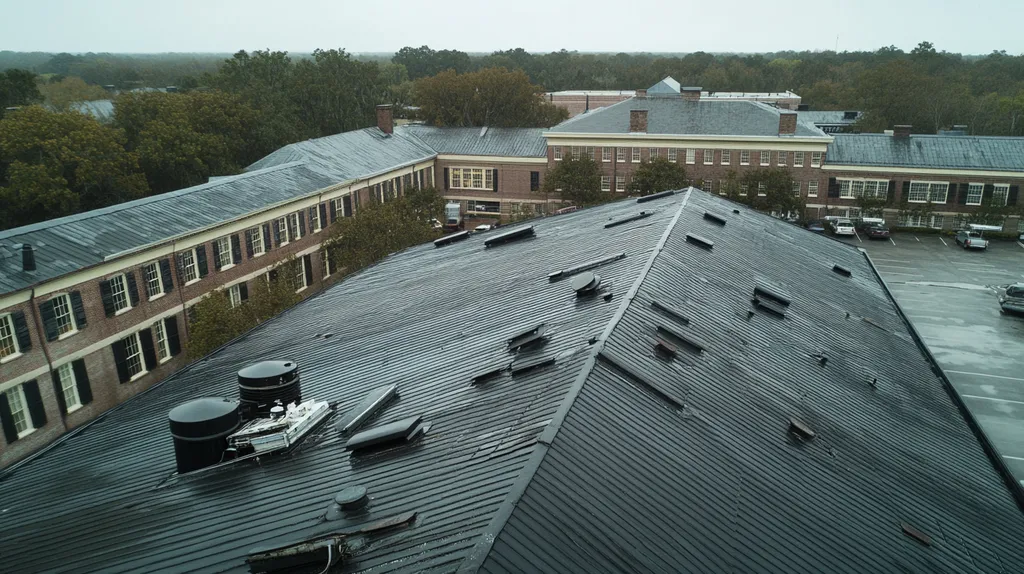
When it comes to commercial roofs loaded with equipment, proper drainage isn’t just important—it’s critical for survival. Studies show that 90% of premature roof failures stem from water-related issues, with equipment-heavy roofs being particularly vulnerable.
From HVAC systems to satellite dishes, rooftop equipment creates unique drainage challenges that can quickly escalate into costly disasters if not properly managed. A single inch of standing water adds 5.2 pounds of weight per square foot—multiply that across a commercial roof, and you’re looking at tons of potential structural stress.
This comprehensive guide breaks down the essential elements of commercial roof drainage systems, focusing specifically on solutions for roofs carrying heavy equipment. We’ll explore everything from basic concepts to advanced maintenance strategies, helping property managers protect their valuable investments.
SECTION 1: THE BASICS EXPLAINED
When it comes to commercial roofs, effective drainage systems are a must-have—especially for those with equipment on top. Water accumulation can lead to leaks, structural damage, and even malfunctioning machinery. In fact, research shows that over 60% of roofing issues arise from poor drainage practices. For property owners and facility managers, grasping these basics is essential to safeguarding investments and ensuring a smoothly operating building.
What It Is (In Plain Language)
A drainage system for a commercial roof is like the rooftop’s best friend, expertly designed to whisk excess water away before it becomes a problem. It includes components like gutters, downspouts, and internal drains, all working together to direct water away from vulnerable areas of the structure. This swift removal of water helps prevent the dreaded pooling that can wreak havoc over time.
For roofs equipped with machinery, the importance of a reliable drainage solution skyrockets. Equipment like HVAC units can hinder water flow and create unique challenges for drainage. A carefully crafted system is crucial, ensuring that the entire roof works harmoniously to keep everything flowing smoothly.
To put it simply, think of a roof drainage system as a funnel that channels rainwater away, keeping both the roof and the building dry. Without this kind of effective drainage, water can build up, leading to leaks and a host of other complications.
Thus, understanding how these systems operate is key for anyone looking to maintain their commercial property effectively.
Why It Matters (To Your Building)
The significance of effective drainage systems cannot be stressed enough. When water overflows, it can create leaks that damage insulation, ceilings, and vital equipment. This not only drives up repair expenses but also disrupts day-to-day business operations in a big way.
But the concerns don’t stop there—poor drainage can also encourage mold growth, creating health risks for anyone who occupies the building. For property managers, ensuring proper drainage maintenance is paramount to avoid these costly and damaging outcomes.
Additionally, robust drainage systems contribute to the longevity of roofing materials. By preventing standing water and relieving the weight burden on the roof, property owners can stave off premature aging and the need for an early roof replacement.
In short, effective drainage systems aren’t just nice to have—they are a crucial element that determines the health and performance of any commercial building.
How It Works
A commercial roof drainage system operates through a series of interconnected components, including scuppers, drains, and downspouts that ensure water flows smoothly off the roof. Rainfall is collected and directed away from the surface, preventing unsightly pooling and potential long-term damage.
At the core of this process is gravity. The roof should be designed with a slope that directs water toward drainage points, making sure it doesn’t gather in low-lying areas where leaks can develop. This careful attention to design plays a critical role in keeping the building dry and safe.
Regular inspections and maintenance are essential for the smooth functioning of these components. Debris blockages can cause backups, leading to significant problems over time. Implementing a routine maintenance plan is key to achieving optimal performance from a drainage system.
When property owners understand how these systems work, they can take proactive steps to mitigate the risks associated with poor drainage and keep their buildings in top shape.
SECTION 2: PRACTICAL APPLICATIONS
When it comes to commercial roofs, effective drainage systems are not just important—they’re vital! If neglected, standing water can lead to costly damage, corrosion of machinery, and a compromised roof structure. Research indicates that poor drainage can shorten a roof’s lifespan by a staggering 30%. Grasping the practical applications of these systems can dramatically enhance maintenance strategies and overall operational efficiency.
Common Uses & Examples
Drainage systems play a pivotal role in various commercial roofing setups. In buildings housing HVAC systems, for instance, proper drainage prevents water accumulation around vulnerable equipment, which could lead to rust and electrical malfunctions. On flat roofs, scuppers and rooftop drains work together to chisel away any risks of leaks, directing water away with impressive efficiency.
In warehouses filled with sensitive equipment, an effective drainage strategy does more than just protect machinery; it also keeps pathways clear for maintenance staff. Regular checks of these drainage systems can help catch blockages early, ensuring smooth operations during peak business times.
Take educational institutions or shopping centers, for example. They often implement multi-tiered drainage systems that maximize water management efficiency. These custom solutions not only ease the load on existing systems but also improve overall drainage capacity, ensuring every drop is directed away from trouble zones.
By recognizing the common uses of drainage systems, facility managers can better tailor their maintenance efforts to the specific needs of their properties.
When You Need It Most
Knowing when drainage systems become essential is crucial for maintaining a healthy roof. Seasonal shifts, particularly during heavy rains or rapid snowmelt, can overwhelm roofs not equipped to handle it. Inadequate drainage can lead to backups that spill over, risking structural damage.
During peak seasons, such as the sweltering summer months, the risk of wear and tear on roofing materials rises dramatically. High temperatures can exacerbate the deterioration of roofing surfaces if not countered with an effective drainage solution. This calls for vigilant assessments to ensure that drainage systems are in tip-top shape.
Regular inspections should follow significant weather events to identify hidden damage beneath water accumulation. Ignoring these early signs can turn minor issues into major headaches, leading to disruptive repairs and escalating costs.
Proactive planning, complete with detailed maintenance schedules that account for environmental conditions, can help facility managers effectively mitigate these risks.
Interactions With Other Systems
Drainage systems don’t work in a vacuum; they are part of a larger ecosystem of roof elements. For example, good drainage optimally supports insulation. If water pools up, insulation becomes less effective, which in turn drives up energy costs and creates temperature imbalances inside the building.
The relationship between drainage and roofing materials is equally significant. Certain roofing membranes work best with specific drainage types, making compatibility crucial during installation. Choosing the right combination can boost both performance and longevity of the roof.
Furthermore, proper integration with building gutters, downspouts, and surrounding landscaping is fundamental. Facility managers must ensure water is efficiently diverted away from foundations to prevent erosion and damage to green spaces.
These interactions underscore the importance of a comprehensive approach to roof design and maintenance. A well-coordinated system can enhance performance, durability, and overall effectiveness in shielding the building below.
SECTION 3: KEY TERMINOLOGY DECODED
Decoding the terminology of commercial roofing drainage systems is not just helpful—it’s essential for effective maintenance. Misunderstanding vital terms can lead to costly mistakes and prolonged downtime. For instance, improper drainage can cause water pooling, risking damage to roofing materials and the structure underneath. This section unravels key terms that will streamline your decision-making process and guard your investment.
Essential Terms Explained
Stormwater management is a foundational concept, encompassing how water is controlled during heavy rains to prevent flooding and safeguard structural integrity. The ‘drainage system’ is a catch-all term that includes components like gutters, downspouts, and drains, each designed to efficiently funnel water away from roofs.
Another crucial term is ‘vegetative roof,’ referring to green roofs adorned with plants that provide insulation but require thoughtful drainage planning. Additionally, ‘ponding’ describes water that accumulates on the roof surface—this is a significant concern since it can lead to early roofing material failure, demanding immediate attention.
Lastly, ‘through-wall flashing’ is a term for moisture barriers integrated into walls, preventing water from seeping in and protecting both the roof and the building’s interior. Understanding these terms lays the groundwork for effective maintenance strategies.
Industry Jargon Translated
Industry terms like ‘roof drainage’ and ‘overflow scupper’ might seem intimidating at first. Roof drainage refers to directing water away from the roof surface to avoid damage. An overflow scupper serves as a backup drainage point, ensuring water doesn’t accumulate during heavy rainfall, reducing potential leaks and structural issues.
You might also encounter the term ‘interior drain,’ which pertains to drainage systems hidden within the building’s walls, crucial for keeping the roof dry. Additionally, ‘drainage slope’ describes the necessary incline for water to flow toward drainage points; understanding this slope is vital for a fully functional drainage system.
Moreover, ‘deck’ refers to the structural surface on which roofing materials are laid. Knowledge of the deck type impacts drainage design, as different materials possess varying resistance to water and load capacities. Familiarity with this jargon enables property owners to communicate effectively with roofing professionals.
Measurement & Units Simplified
Accurate measurements and units are vital in the realm of roofing drainage for assessments and repairs. A standard measurement you’ll encounter is ‘inches per foot,’ denoting the slope required for efficient drainage. A recommended minimum slope of 1/4 inch per foot helps ensure water flows without pooling.
Another important measurement is ‘gallons per minute’ (GPM), used to evaluate how quickly water flows through drainage systems. Understanding the GPM capacity is essential for designing or upgrading systems that can handle heavy rainfall. Additionally, ‘square feet’ measures roofing area and directly affects the number and size of drains needed.
Lastly, grasping the ‘length’ and ‘width’ of drainage components is crucial for proper installation and operation. Accurate dimensions ensure that drainage systems efficiently redirect water. Simplifying these measurements empowers facilities managers to make informed, confident decisions without the fog of technical jargon.
SECTION 4: DECISION FACTORS
Selecting an effective drainage system for commercial roofs is no small endeavor—especially when heavy machinery is involved. With nearly 90% of roof failures attributed to poor drainage, the stakes are high. Property owners and facility managers must consider several critical factors to protect their investments and maintain operational productivity. Whether it’s costs, performance, or durability, these decision factors can significantly impact the building’s health.
Cost Considerations
Cost ranks at the top of the list when choosing a drainage system for commercial roofs. While opting for the lowest-cost option may look attractive upfront, it’s essential to think long-term. Cheaper systems often come with hidden costs, requiring frequent repairs and replacements that can add up quickly. Investing in a high-quality drainage solution pays off, keeping maintenance expenses down over the roof’s lifespan.
Installation costs can fluctuate based on the design of the drainage system. For instance, a solution that effectively integrates with existing rooftop equipment may lower labor costs during installation. Conversely, more complex systems may entail a higher initial investment but can save substantial money by preventing extensive damage down the line.
Don’t overlook the potential impact on insurance costs, either. Roofs equipped with efficient drainage systems might qualify for lower premiums, reflecting their reduced risk of damage. Factor in these potential savings when crafting a smart financial plan.
Maintenance costs also deserve attention. Yes, simpler drainage systems may seem cheaper to maintain, but if left unchecked, they can lead to crippling expenses later on. Striking a balance between upfront costs and future savings is crucial in making a prudent financial decision.
Performance Trade-offs
When evaluating drainage systems, expect some performance trade-offs. Property owners must strike a balance between efficiency and capacity. A system that performs well during heavy rainfall might struggle with lighter showers, leading to maintenance issues. Understanding these nuances is crucial for optimizing performance.
Compatibility is another key consideration. Some drainage solutions can clash with rooftop equipment like HVAC systems, creating areas for water to accumulate. Ensure that any chosen system smooths out the interactions with existing installations for seamless operation.
Climate and geographical location also come into play. Different systems excel in various environments; those in areas prone to heavy snowfall or frequent storms should be assessed carefully. Underestimating local weather impacts might lead to costly failures, like roof leaks or equipment damage.
Lastly, consider the weight versus durability balance. Heavier systems may offer better durability but could stress the roof structure. A solid understanding of these performance dynamics will empower property owners to make decisions that promote safety and longevity.
Lifespan & Durability Factors
Choosing the right drainage solution involves a savvy assessment of lifespan and durability. Commercial roofs face a barrage of stressors, from harsh weather to heavy equipment. High-quality materials typically correlate with longer lifespans, translating to better value for property owners.
Be sure to take note of warranty options. A solid warranty often signals a manufacturer’s confidence in the system’s longevity. Aligning the drainage system’s expected lifespan with the anticipated service life of the roof and equipment is vital for long-term satisfaction.
Durability impacts the frequency of required maintenance, too. Systems that can withstand punishing conditions without much upkeep ease the burden on facility management teams. This means savings in both labor and materials over time.
Finally, consider the historical performance of drainage systems in environments similar to yours. Engaging with reliable suppliers who understand local weather patterns can provide invaluable insight, guiding property owners to make well-informed decisions.
SECTION 5: COMMON CHALLENGES
Effective drainage systems are the unsung heroes of commercial roofs, safeguarding them from serious threats like leaks, structural deterioration, and expensive repairs. Alarmingly, studies reveal that up to 70% of roof failures stem from inadequate drainage. In this section, we’ll tackle common problems, spot warning signs you can’t ignore, and outline preventative measures that can protect your assets and extend your roof’s lifespan.
Frequent Problems & Solutions
One of the most prevalent issues with commercial roof drainage is clogs formed by debris buildup. Leaves, dirt, and even small critters can create blockages that hinder water flow. Regular inspections and cleanings are essential to prevent clogs, and incorporating gutter screens can further reduce the risk of accumulation.
Another common challenge is the improper slope of flat roofs, which can result in unwanted water collection. It’s vital to ensure a sufficient slope is built into the roof design to facilitate effective water runoff. Correcting existing slope issues may require a significant investment, but it’s crucial for the long-term health of the roof.
Choosing the wrong type of drainage system can complicate matters even more. It’s essential to seek advice from roofing professionals to ensure that the selected drainage system aligns with the specific roof type and local weather patterns, minimizing trouble further down the road.
Aging drainage components can also lead to failures and leaks. Regular maintenance checks to assess wear and tear can help identify when replacements are needed, allowing for easy fixes before escalating problems arise. Proactive care goes a long way in maintaining a solid drainage system.
Warning Signs To Watch For
Keeping an eye out for indicators of inadequate drainage is crucial for property owners. One major warning sign is standing water on the roof after heavy rainfall, which can lead to leaks or structural issues if left unchecked. Monitoring areas where water collects can provide insights for necessary improvements.
Water stains appearing on interior ceilings or walls raise another red flag. These stains indicate that water is likely seeping through due to drainage deficiencies. If you spot these stains, immediate investigation is essential to prevent worsening damage.
It’s also important to observe the drainage outlets. If water is draining slower than expected, it may suggest blockages or an inadequate system design. Taking prompt action can avert severe damage caused by prolonged exposure to standing water.
Finally, an uptick in pests around drainage areas might signal poor system performance. Standing water often attracts insects and wildlife, creating additional concerns for hygiene and structural integrity that should be addressed without delay.
Preventative Approaches
Establishing a consistent maintenance schedule is a key approach to preventing issues. Routine inspections and cleanings of the drainage system, including gutters and downspouts, can help catch small problems before they expand into major headaches.
Investing in the right drainage system during initial installations or upgrades is equally critical. Collaborating with experienced contractors ensures that the chosen solution is specifically tailored to the building’s needs and the environmental conditions it faces.
Additionally, a thoughtful landscape management plan can significantly reduce debris entering drainage systems. Planting native or low-maintenance vegetation and positioning trees away from roofs can minimize clogging risks.
Finally, leveraging technology such as water sensors can enhance monitoring capabilities. These systems offer real-time data, alerting property managers to drainage issues before they escalate into costly repairs (source: Instacoat Premium Products).
SECTION 6: NEXT STEPS & RESOURCES
With the stakes so high for commercial roofs carrying heavy equipment, the effectiveness of drainage systems cannot be overlooked. Neglect can result in costly repairs and significant safety hazards—creating headaches that could have been avoided. Research indicates that inadequate drainage is often the root cause of structural damage, raising liability concerns. To navigate these challenges, asking the right questions and seeking credible resources is vital for making informed decisions regarding drainage solutions.
Questions To Ask Providers
Engaging potential roofing providers requires careful consideration and specific questions about their drainage system designs. It’s essential to ask about their experience with projects similar to yours and request examples of previous successful installations. Their understanding of local weather conditions can shed light on their competence in creating effective solutions.
Don’t overlook inquiries about compliance with industry standards. A reputable provider should be well-versed in regulations that govern drainage systems, which can shield you from future liabilities. Clarifying warranty details and service agreements can also provide crucial insights, informing maintenance strategies down the line.
Additionally, explore the maintenance plans that providers can offer. Regular assessments are vital for spotting blockages and proactively addressing potential problems before they escalate. A comprehensive maintenance plan reflects a provider’s commitment to quality and ongoing support.
Finally, don’t hesitate to review references and testimonials from previous clients. A trusted provider will readily share positive feedback that highlights their capability in managing complex drainage systems effectively.
Industry Standards & Guidelines
Familiarizing yourself with industry standards is critical for maintaining efficient drainage systems. Notable organizations like the National Roofing Contractors Association (NRCA) and the American Society of Civil Engineers (ASCE) offer key guidelines outlining best practices in drainage design and installation.
Also, take time to understand the Uniform Building Code (UBC), which outlines essential requirements for drainage systems to ensure safe and efficient installations. Utilizing these resources can empower property owners and facility managers to make educated decisions about their drainage solutions.
Staying informed about advancements in materials and technology is equally important. Innovations can significantly enhance drainage performance and durability. Attending regular training sessions and workshops can lend valuable insights into new techniques as they emerge.
Lastly, consider partnering with organizations that provide continuing education opportunities. Ensuring that staff remains knowledgeable about drainage issues can lead to improved oversight and better maintenance practices.
Further Learning Simplified
Continuous education is key to effective drainage management. Numerous online platforms offer accessible courses specifically designed for property owners and facility managers, making complex concepts easy to understand.
Participating in webinars hosted by industry experts can provide real-time insights into evolving standards and practices. These sessions foster learning from peers and encourage discussion of current industry challenges.
Additionally, trade shows and local workshops serve as excellent venues for networking while gaining new knowledge. Attending these events keeps property managers up-to-date with industry trends and innovative solutions for drainage issues.
Lastly, subscribing to industry publications ensures access to the latest information regarding drainage systems and maintenance strategies. Staying informed equips facility managers to make timely and effective decisions about their roofing systems.
The Bottom Line
With 90% of premature roof failures stemming from water-related issues, proper drainage isn’t just a maintenance item—it’s a critical investment in your building’s future.
The stakes are particularly high for commercial roofs carrying heavy equipment, where even minor drainage issues can cascade into catastrophic failures costing hundreds of thousands in repairs.
Regular inspections, proactive maintenance, and partnership with qualified professionals remain the cornerstones of effective drainage management.
By implementing the strategies outlined in this guide, property owners and facility managers can significantly extend their roof’s lifespan while protecting valuable equipment investments.
Remember: when it comes to commercial roof drainage, an ounce of prevention truly is worth a pound of cure—or in this case, thousands of dollars in avoided repairs.
FREQUENTLY ASKED QUESTIONS
Q. What is a drainage system for a commercial roof?
A. A drainage system for a commercial roof helps divert excess water efficiently. It includes components like gutters and drains that prevent water accumulation, avoiding potential leaks and structural damage.
Q. How can I improve my industrial roof’s drainage system?
A. To enhance your drainage system, ensure regular maintenance and clear any blockages. Consider installing scuppers or additional drains to help redirect water flow and prevent pooling, especially near HVAC equipment.
Q. What key terms should I know about commercial roof drainage?
A. Key terms include ‘stormwater management’, ‘ponding’, and ‘through-wall flashing’. Understanding these concepts helps you better communicate with professionals and make more informed decisions regarding maintenance.
Q. What factors influence the choice of drainage systems for commercial roofs?
A. Consider cost, performance, and compatibility with existing equipment when selecting a drainage system. Evaluating the roof’s expected lifespan and the local climate can greatly impact your decision and investment.
Q. What are common challenges with drainage systems on commercial roofs?
A. Common challenges include clogs from debris, improper roof slopes, and aging components. Regular inspections can help catch these issues early, preventing significant damage and costly repairs down the road.
Q. What maintenance steps should I take for my commercial roof drainage?
A. Set up a routine inspection and cleaning schedule for your drainage system. Look for blockages, ensure proper slopes, and check that all components are in good condition to keep water flowing efficiently.
Q. How does weather affect drainage systems on commercial roofs?
A. Weather can greatly impact drainage systems; heavy rains and rapid snowmelt can overwhelm capacities. Regular assessments after severe weather are crucial to identify hidden damages that could lead to serious problems.






